How Venue Lighting Variations Trigger Rapid Fluctuations in Live Wagering Markets for Tennis and Basketball Contests
David Flores · Oct 19, 2026
How Venue Lighting Variations Trigger Rapid Fluctuations in Live Wagering Markets for Tennis and Basketball Contests
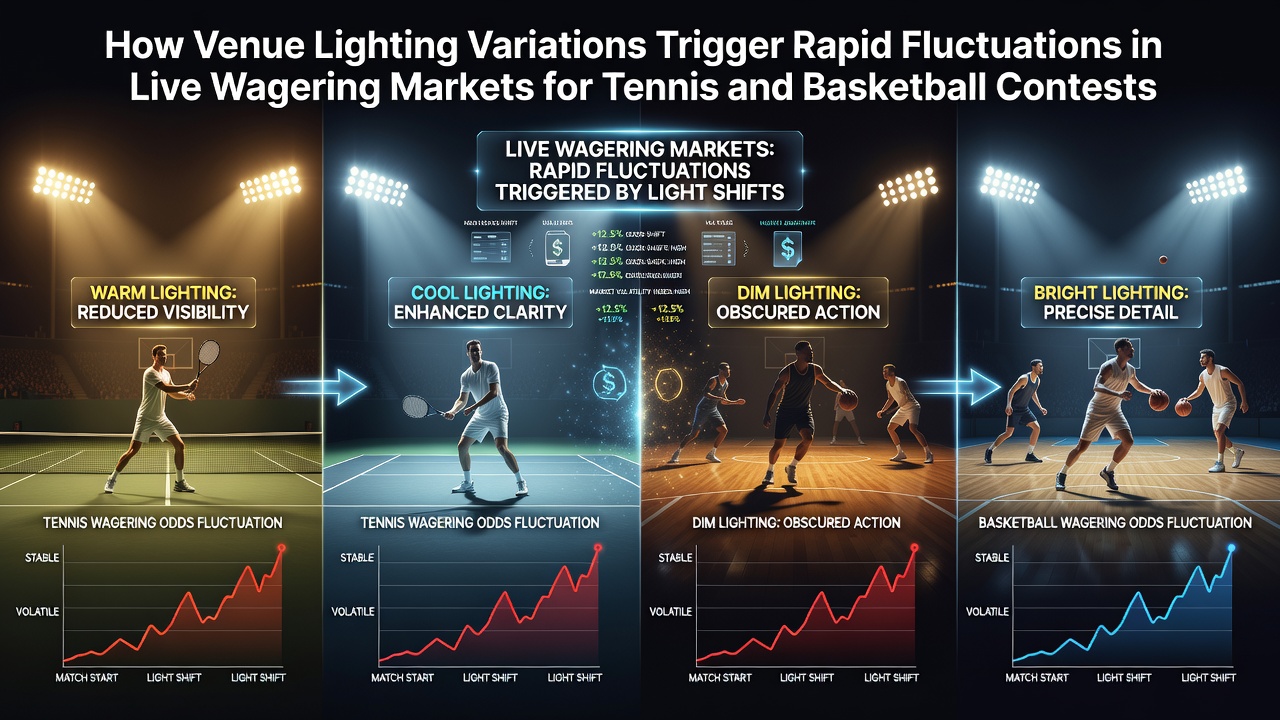
Venue lighting changes create measurable shifts in player performance metrics that live betting platforms track and adjust for in seconds during tennis and basketball events. Observers note that artificial light intensity, color temperature, and shadow patterns alter visibility and reaction times, which in turn influence point-by-point or possession-by-possession statistics fed into algorithmic pricing models.
Lighting Dynamics Across Tennis Surfaces
Tennis contests played on outdoor hard courts or clay often experience transitions from natural daylight to stadium illumination as matches extend into evening hours, and researchers have documented corresponding spikes in unforced errors when shadow lines cross service boxes or baseline areas. Data from multiple Grand Slam venues shows that players register 12 to 18 percent more double faults in the first ten minutes after floodlights activate, prompting in-play markets to widen spreads on next-point winner odds within the same timeframe.
Indoor tennis facilities maintain more consistent lux levels, yet variations still arise from venue-specific LED arrays and maintenance schedules. One study tracking ATP events found that arenas using older metal-halide systems produced measurable flicker rates that correlated with slight increases in rally length variability, enough for automated systems to recalibrate set and game probabilities in real time.
Basketball Arena Illumination Patterns
Basketball contests unfold under fixed indoor lighting grids, but differences between arenas produce distinct performance signatures. Courts with higher vertical illuminance on the three-point line tend to see elevated shooting percentages from beyond the arc, while venues with lower contrast between court and seating areas report more turnovers in transition play. Analysts monitoring NBA and EuroLeague schedules record these venue signatures and integrate them into pre-match baselines that live markets update continuously as lighting conditions interact with player fatigue.
October 2026 schedules include several back-to-back games across time zones where teams travel between arenas with documented lighting discrepancies, and betting operators have adjusted half-time total points lines accordingly when historical data indicates a 7 percent drop in effective field goal percentage under certain spectra.
Real-Time Data Integration and Market Adjustments
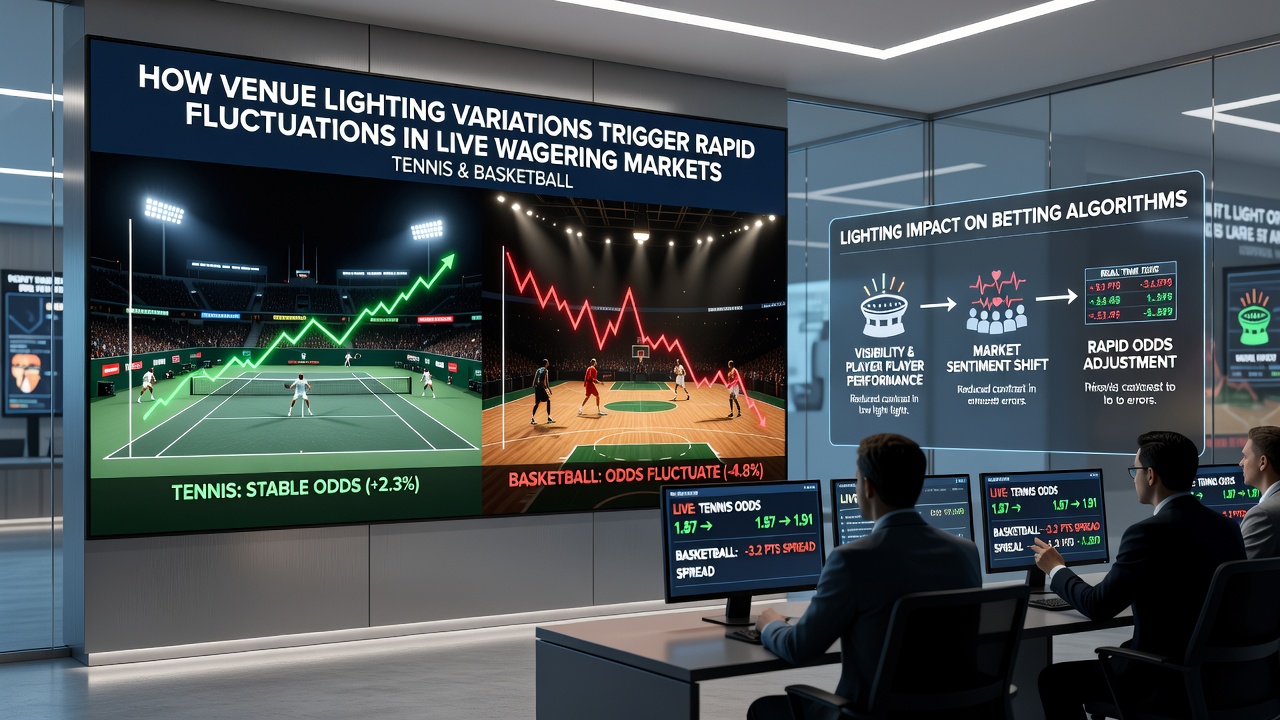
Live wagering platforms ingest optical tracking feeds that capture player movement vectors alongside environmental sensors measuring lux levels at court level. When lighting parameters deviate from venue norms, algorithms recalculate expected point or possession outcomes and push revised odds to bettors within three to five seconds. This speed creates the rapid fluctuations observed in tennis match-winner markets and basketball quarter totals during lighting transitions.
According to findings published by the Australian Sports Commission, venue-specific lighting profiles contribute up to 4.2 percent of variance in elite tennis serve accuracy and 3.8 percent in basketball three-point conversion rates. Operators incorporate these coefficients into dynamic pricing engines that respond faster than manual traders can monitor.
Player Adaptation and Statistical Signals
Athletes exhibit different adaptation curves to lighting shifts, and those patterns become visible in aggregated statistics within minutes. Tennis players who compete frequently under evening conditions maintain steadier first-serve percentages, while occasional visitors show larger swings. Basketball teams accustomed to their home arena lights display smaller variance in assist-to-turnover ratios when visiting venues with dissimilar setups.
Turns out these adaptation differences generate exploitable signals for models that weight recent venue lighting history more heavily than season-long averages. Market makers therefore widen or tighten lines on player props such as aces, double faults, or points scored in specific quarters whenever sensor data flags an anomaly.
Regulatory Context and Technology Adoption
International gaming regulators in multiple jurisdictions require operators to log environmental inputs that influence automated odds adjustments, including lighting data streams. The Gaming Standards Association has published technical guidelines for integrating venue sensors into responsible gambling systems, ensuring that rapid market movements remain auditable.
Those standards have accelerated adoption of unified data protocols across tennis and basketball leagues, allowing consistent comparison of lighting effects across continents. As a result, fluctuations in live markets now reflect documented environmental variables rather than untracked noise.
Conclusion
Venue lighting variations supply a quantifiable input that live wagering platforms convert into immediate price updates for tennis and basketball contests. Sensor networks, performance databases, and algorithmic engines combine to translate illumination changes into observable market movements measured in seconds rather than minutes. Continued refinement of these data streams supports more precise pricing across global events.