Satellite Tracking Innovations Reshaping Real-Time Adjustments in Horse Racing, Cricket and Boxing Markets During Events
Rosa Russell · Aug 19, 2026
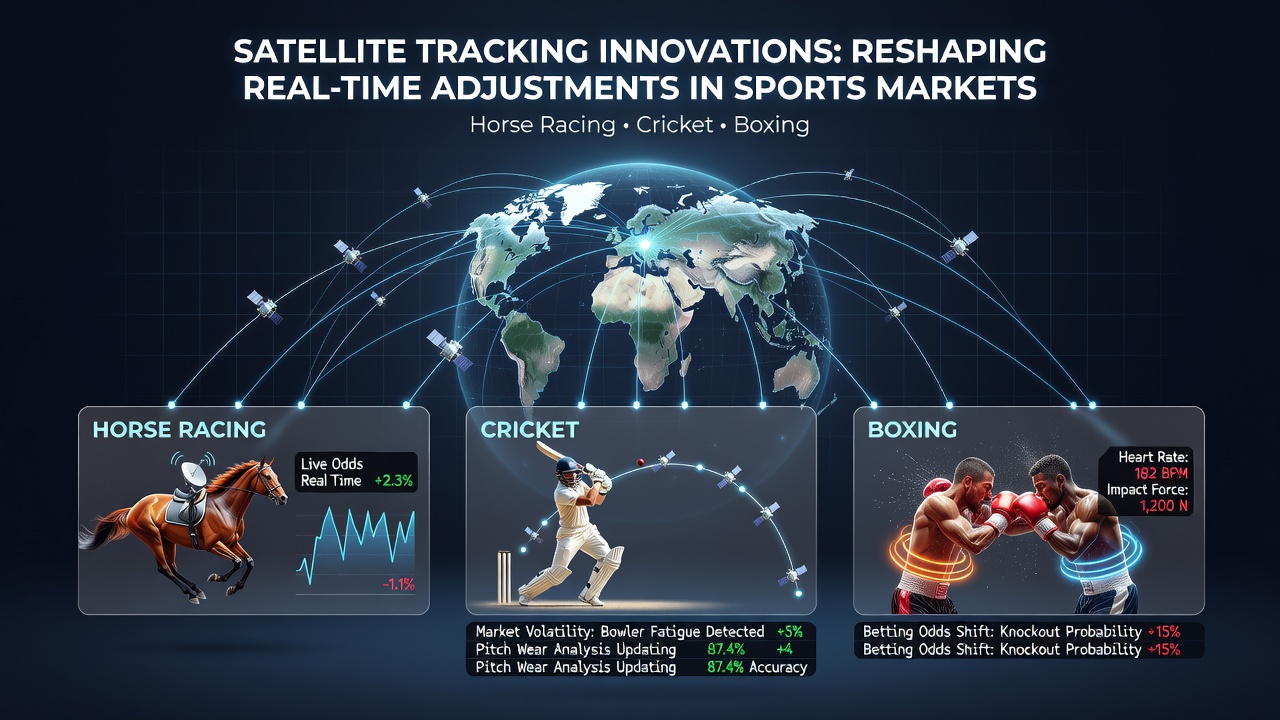
Satellite Tracking Innovations Reshaping Real-Time Adjustments in Horse Racing, Cricket and Boxing Markets During Events
Satellite tracking systems now feed precise location data into betting platforms across horse racing, cricket and boxing, which allows operators to recalibrate odds within seconds of on-field developments. These technologies combine GPS signals with additional satellite networks to capture movement at sub-second intervals, and this continuous stream reaches market algorithms that adjust probabilities based on current conditions rather than pre-event estimates.
Positioning Data in Horse Racing Events
Horse racing adopted satellite tracking earlier than most sports because the open courses provide clear signal access, and jockeys carry lightweight transponders that transmit speed, stride length and track position to central receivers. By August 2026 multiple racing authorities had upgraded their networks to include multi-constellation receivers that draw from both GPS and Galileo satellites, which reduces signal loss during turns and improves accuracy to within one metre. Operators use this information to recalculate probabilities for outcomes such as finishing order and sectional times, while bettors see updated markets that reflect whether a horse has maintained pace or begun to fade.
Studies conducted by the Australian Institute of Sport show that real-time positional feeds cut the lag between physical performance and market response from roughly eight seconds to under two seconds in major meetings. Trainers and analysts receive the same data streams, which lets them compare live metrics against historical benchmarks without waiting for post-race reports.
Enhanced Monitoring in Cricket Matches
Cricket introduced satellite-linked sensors into player gear and ball-tracking equipment to supplement existing camera systems, and this combination delivers continuous updates on bowler release points, batsman footwork and ball trajectory during each delivery. The added satellite layer maintains accuracy when camera angles become obstructed by stadium structures or weather, and data centres route the information directly to trading engines that manage in-play markets on next-ball outcomes and session totals. Research published through the European Space Agency applications programme indicates that hybrid satellite-camera systems maintain tracking integrity above 98 percent even during night matches under floodlights.
Match officials and statisticians rely on these feeds to verify run rates and fielding positions, while betting platforms adjust odds for individual player contributions as the match progresses. The result appears in narrower spreads for live wagers because algorithms incorporate actual pitch conditions and player fatigue markers extracted from movement patterns.

Applications Within Boxing Competitions
Boxing promoters began testing wearable satellite trackers on athletes during training camps in 2024, and by mid-2026 several international cards included the devices during actual bouts to record punch velocity, footwork range and ring positioning. Although the enclosed environment limits pure satellite visibility, the units combine short-range radio with occasional satellite corrections to maintain a continuous data link. This information reaches market systems that update probabilities for round outcomes and fight duration, because sudden changes in movement patterns often precede shifts in fight control.
Regulatory bodies in Australia and Canada have reviewed the collected datasets to establish baseline movement profiles for different weight classes, and these profiles help platforms calibrate risk models more precisely than static pre-fight statistics alone would allow. Observers note that the same data also supports medical teams in identifying fatigue indicators before visible signs appear to spectators.
Integration With Betting Market Systems
Market operators connect satellite feeds to automated pricing engines through secure application programming interfaces, and each new data packet triggers a recalculation cycle that evaluates thousands of potential outcomes in parallel. When a horse accelerates on the final bend or a batsman shifts stance, the system registers the change and modifies associated odds before most viewers notice the development on screen. Industry reports compiled by the World Lottery Association document that platforms employing these methods record fewer instances of stale odds during live periods compared with earlier manual-update processes.
The infrastructure requires redundant satellite receivers and low-latency transmission paths, which keeps the overall delay between event and market response below the threshold that would allow arbitrage opportunities. Security protocols encrypt the data streams and verify source integrity at each hop, which prevents unauthorised alterations that could distort pricing.
Conclusion
Satellite tracking continues to expand across these three sports because the technology supplies verifiable, high-resolution movement data that directly informs live market adjustments. As receiver costs decline and multi-constellation coverage improves, additional events will likely adopt similar systems, and operators will refine their algorithms to extract further performance indicators from the same positional streams. The pattern shows a steady shift toward shorter update cycles and tighter integration between on-site sensors and global betting platforms.